If you’ve been working in SEO for more than five minutes, Semrush is probably a permanent fixture on your screen. Keyword research, messy site audits, watching competitor moves, checking backlinks—it’s the one tool that just sits open in a browser tab all day, every day.
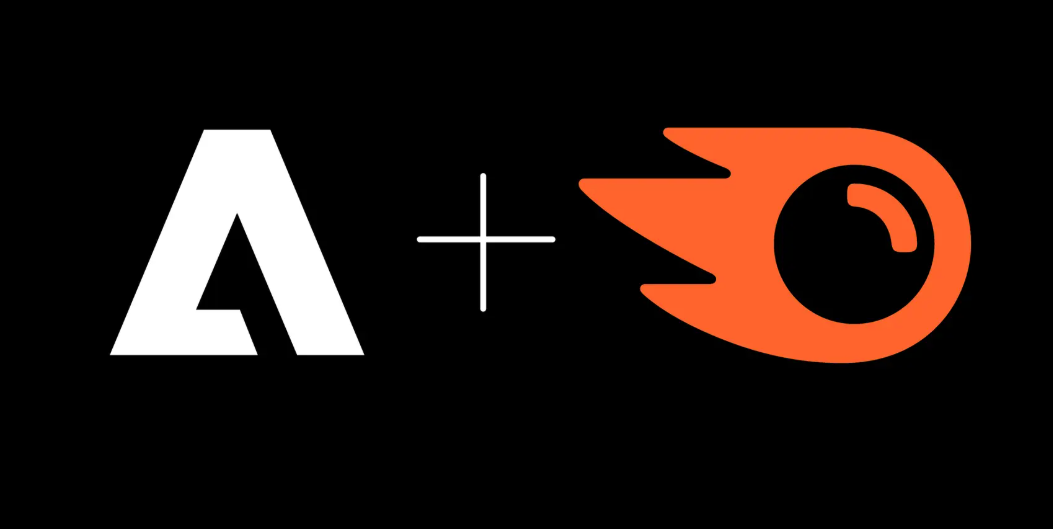
So when Adobe dropped the news last November that they were buying Semrush for a cool $1.9 billion in cold, hard cash, the collective reaction across the industry was basically: Wait… Adobe? So the news is Adobe buys Semrush.
It’s a weird pairing on paper. Adobe dominates creative and heavy enterprise marketing with Photoshop, Premiere, and their Experience Cloud. Semrush, on the other hand, is the gritty, everyday toolbox for scrappy freelancers, mid-sized agencies, and in-house teams. The deal felt a little like your local, trusted neighborhood mechanic getting bought out by an international car manufacturer—cool for them, sure, but you immediately start worrying if your next quick oil check is going to require a 12-step enterprise corporate onboarding process.
Well, the ink is dry. The acquisition officially wrapped up on April 28, 2026. Now that it’s a done deal, it’s time to look past the corporate hype and figure out what this actually means for our tools, our day-to-day work, and the future of search.
How Did We Get Here?
The initial November 2025 announcement caught almost everyone flat-footed. But looking back, Semrush had been quietly dropping hints that they were positioning themselves for a massive exit.
Over the last few years, Semrush went on its own quiet shopping spree. They bought Brian Dean’s Backlinko, took over the Traffic Think Tank community, and snagged Third Door Media (the powerhouse team behind Search Engine Land). Those wasn’t just random revenue plays. Semrush was intentionally cementing itself right at the absolute center of the search marketing culture, transitioning from a basic SaaS tool into a massive industry authority.
Adobe’s pitch for the buyout was pretty clear-cut. They are betting big on what they call the “agentic AI” era—the shift toward autonomous AI agents handling research, discovery, and actual buying decisions for users. In that kind of world, brands can’t just worry about ranking blue links on a Google SERP. You have to be deeply visible inside the generative answers whipped up by ChatGPT, Gemini, Perplexity, and whatever rolls out next. Adobe saw Semrush as the perfect data infrastructure layer to keep brands visible across those new AI surfaces.
“The rules of brand discovery and commerce are being rewritten in real time, and marketers who aren’t optimising for that world today will find themselves invisible tomorrow.” — Anil Chakravarthy, President of Adobe’s Customer Experience Orchestration Business
Looking at the raw numbers, Adobe paid $12 a share—a massive 77% premium over where Semrush was trading the day before the leak. Both boards rubber-stamped it fast, the stock went vertical by 70% on the news, shareholders said yes, regulators signed off, and the whole thing closed cleanly in the first half of 2026 right on schedule. No dramatic legal hurdles, just a clean, fast billion-dollar transaction.
So Why Does Adobe Care About an SEO Tool?
The simple truth is that Adobe doesn’t look at Semrush as just an “SEO tool.” They view it as an all-in-one brand visibility platform. That shift in vocabulary matters a lot.
Adobe has been aggressively assembling something called Adobe CX Enterprise—their massive, end-to-end sandbox designed to track how brands look and talk to consumers at every single digital intersection. They already owned content creation (their historic bread and butter), customer data platforms, and personalization tools. Adding Semrush gives them the final puzzle piece: the literal discoverability engine that measures how visible a company is across standard search, AI bots, and paid media.
If you read their recent corporate press releases, Adobe keeps hammering three specific acronyms that you should probably get used to seeing:
-
SEO: Traditional Search Engine Optimization.
-
GEO: Generative Engine Optimization (how your business pulls citations in AI answers).
-
ASO: Agentic Search Optimization (how AI bots find and suggest your brand when they are autonomously shopping or researching for a human user).
Semrush was already building out tracking modules for GEO, and Adobe is clearly betting that ASO is going to be the next big operational battleground for brand survival.
For massive enterprise accounts already paying for Adobe Experience Manager, Adobe Analytics, and Adobe Commerce, blending Semrush’s data into that single ecosystem makes a ton of sense. Instead of logging into five different dashboards to see how your blog is ranking on Google versus how often it’s being cited in an AI Overview, everything gets consolidated into one giant screen.
The Practical Questions Nobody Is Answering Yet
Let’s skip the shiny corporate PR for a second and talk about the real-world stuff that actually impacts working SEOs and agency owners. There are some huge, glaring questions still hanging in the air.
Pricing is the elephant in the room. Right now, Semrush is relatively accessible. A solo freelancer or a boutique agency can pick up a plan and run their business off it. But Adobe’s software catalog is famously expensive. While there’s no official word that they’re going to restrict Semrush to high-tier Experience Cloud enterprise bundles and price out the little guy, it’s a massive concern that everyone is quietly keeping an eye on.
Then there’s the question of product independence. Semrush has always had its own unique tool roadmap, a massive community footprint, and deep integrations with other tools. Bill Wagner (Semrush CEO) said all the standard comforting things when the deal closed—that the core mission isn’t changing, that they’re just scaling up, etc. But real corporate integration takes years, and product roadmaps have a habit of shifting when you suddenly answer to a $20+ billion legacy software giant.
What happens to Search Engine Land and the media properties? Remember, Semrush bought Third Door Media in 2023. That means Adobe now owns Search Engine Land and the MarTech conference circuit. Those are pure news, editorial, and event spaces, not software products. Adobe is a pure-play software business. How an independent, trusted industry publication survives or adapts under corporate software ownership is anyone’s guess.
Finally, the API access bottleneck. A massive percentage of custom agency reporting dashboards, proprietary tools, and data warehouses pull their raw intelligence directly through Semrush’s API. If Adobe decides to restructure, reprice, or heavily throttle that API access post-acquisition, it’s going to cause a massive, expensive domino effect across the entire agency tech stack.
What This Tells Us About the True Direction of SEO
If you look at the bigger picture, this buyout says a lot about where search marketing is going next.
The fact that Adobe—a company with zero skin in the SEO tool game a year ago—just dropped nearly two billion dollars to buy a search platform proves something critical. Visibility in organic search and AI engines is no longer just a siloed problem for technical SEO nerds down in the basement. It’s officially a CMO problem, a core brand problem, and a vital piece of enterprise infrastructure. Adobe’s entire bet is that organic discoverability needs to live right alongside content creation, data analytics, and e-commerce—not treated as a separate, specialized marketing channel.
Whether you like that corporate future or hate it, the structural shift is undeniable. Adobe leaked a striking data point in their acquisition brief: AI-driven traffic to US retail websites skyrocketed by 269% year-over-year in March 2026. Let that sink in. Brands that are still exclusively optimizing for traditional, blue 10-blue-link Google rankings are literally playing a totally different game than the one their actual target customers are playing.
For professional SEOs, this reality is both deeply validating and incredibly stressful. It’s validating because it proves organic search visibility is so insanely valuable that Adobe spent a fortune to get a piece of it. But it’s stressful because the definition of “search” is fracturing at breakneck speed. The exact core playbooks and tool tricks that worked flawlessly for the last ten years are suddenly just a tiny piece of a much larger, messy board.
What Should You Actually Do Right Now?
-
If you use Semrush today, don’t panic. Keep your account open and keep running your campaigns. The software isn’t vanishing overnight, and Adobe wants to retain those subscription numbers while they figure out the backend integration. Just read your renewal terms and contracts carefully over the next 12 to 18 months.
-
If you don’t use Semrush, run some tests. If you’ve been on the fence about trying out their new AI visibility trackers or GEO monitoring suites, log in and test them now. It’s smart to see how they work before Adobe potentially reworks the UI or tweaks the pricing tiers.
-
Fix your AI visibility strategy. If you haven’t sat down to figure out how your site content gets fed into and cited by LLMs, this acquisition is your wake-up call. The classic foundations—clean technical site health, stellar original content, high-quality backlinks, and real E-E-A-T—still matter immensely. But in 2026, those foundations are just the absolute floor, not the ceiling.
Final Thoughts
Massive tech acquisitions are almost never as ground-shakingly amazing as the marketing teams claim, but they’re rarely as apocalyptic as the industry doomsayers scream on LinkedIn. The reality always hits somewhere right in the middle. Semrush will keep doing what it does best for the foreseeable future. Adobe will gradually weave those data endpoints into their enterprise clouds. Some features will get way cooler; some workflows will undoubtedly get annoying.
But the macro-shift this deal signals—a world where appearing inside an AI answer is just as critical to business survival as ranking #1 on a traditional search engine—is 100% real. And it’s something you need to be paying attention to, no matter what tools you use.

Sanjeev Kumar is a digital marketing expert with over 14 years of experience in SEO, PPC, content marketing, and online growth strategies. He specializes in search engine optimization, AI-driven marketing, and digital strategy for businesses and agencies worldwide.